Summary Building a white-label medical device portfolio is not just about adding a logo to a catalog product. It is a structured approach that involves strategy, regulation, device selection, portfolio consistency, and a reliable industrial partnership. This guide provides a concrete method to build a solid, differentiating, and compliant offer.
Why launch a white-label medical device product line?
For a laboratory, a pharmaceutical group, or a distributor, private labeling is no longer a marginal option. It is a strategic lever for:
- strengthen its positioning among healthcare professionals,
- mastering margins on high-turnover products,
- propose a credible alternative to major historical brands,
- structure a coherent offer under your own identity.
The issue is not just adding a few references, but building a real range of medical devices: thermometers, valved holding chambers, blood pressure monitors, care devices, etc., with an impeccable level of quality and compliance.
1. Clarify the strategy before selecting the devices
Before choosing a thermometer or a spacer, it is essential to ask yourself three simple questions:
- Who is the product line for?
Local pharmacies, clinics, hospitals, specialized networks, export... - Which positioning?
Accessible, premium, innovation-driven, everyday care-oriented? - What differentiating benefits?
Stable prices, enhanced compliance, greater ease of use, better readability of instructions, etc.
It is this vision that will guide the choice of devices and the level of requirement to impose on your manufacturer.
2. Choose priority medical device families
A white-label medical device range can be built using a modular “building block” approach based on the most frequent needs in pharmacies or healthcare facilities. For example:
- devices of’self-monitoring thermometers, blood pressure monitors, devices for relieving insect bites; ;
- devices of’inhalation and breathing valved holding chambers for children and adults; ;
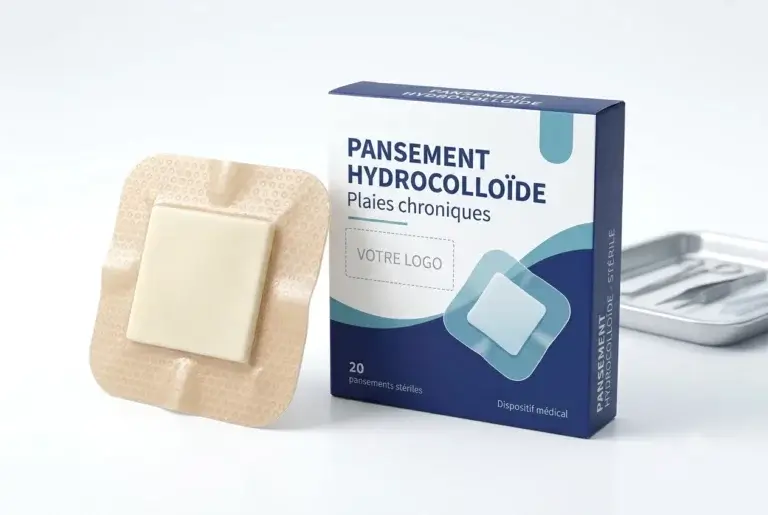
- devices of’hygiene and care bandages, sterile cotton swabs, first aid kits; ;
- devices of’self-diagnosis (according to your actual catalog).
The idea is not to launch everything at once, but to start with a core of 3 to 5 strong references, which meet real and visible needs at the counter.
3. Integrate the regulatory framework from the beginning
Building a range of medical devices also means accepting to work within a demanding regulatory framework:
- device classification (class I, IIa, etc.); ;
- mandatory CE marking; ;
- compliance with Regulation (EU) 2017/745; ;
- technical documentation, user manuals, labeling, traceability.
A good industrial partner must be able to clearly explain:
- under which regulatory status between each device,
- what standards are applied (for example EN ISO 13485, EN ISO 14971),
- how traceability, batch numbers, and quality controls are managed.
That is besides one of the strengths of a white label pharmaceutical manufacturer who already knows the requirements of the European market.
4. Build a product range based on patient needs rather than a catalog
For the product line to make sense to pharmacists and their patients, it is often more effective to think in terms of care pathway rather than as a reference list.
Simple example of structuring by need
| Patient need / situation | Possible medical devices |
|---|---|
| Fever at home | Infrared thermometers, digital thermometers |
| Blood pressure monitoring | Upper arm blood pressure monitors, wrist blood pressure monitors (depending on strategy) |
| Asthma / bronchitis / COPD | Valved holding chamber for children and adults |
| Insect bites / itching | Insect bite relief devices |
| Minor aches & daily care | Bandages, first aid kits, sterile cotton wool |
This allows:
- to the pharmacy teams of understand quickly the product line strategy ;
- for marketing to align messaging and collateral; ;
- it is up to your industrial partner to propose coherent device combinations.
5. Develop the product line's identity: packaging, readability, consistency
A white-label range of medical devices must remain legible and reassuring. For this, three elements are key:
- Consistent packaging design
Same front panel structure, clear information hierarchy, color coding by usage (breathing, fever, blood pressure, etc.). - A simple promise
For example: “Reliable, easy-to-use medical devices developed for pharmacies and their patients”. - Accessible language
Regulatory notices are mandatory, but the visible message must remain understandable to the general public.
This work is all the more seamless if the manufacturer integrates packaging into its service, as does Smart Agents Healthcare on its white-label product ranges
6. Relying on an experienced manufacturer: a decisive element
Choosing the manufacturer is probably the most structuring aspect of your project. A good partner must be able to support you with:
- there selection of relevant devices by market (France, Europe, export),
- there regulatory compliance of the proposed devices,
- there industrial grade (tests, inspections, audits),
- there logistics (packaging, palletization, lead times, Europe / Asia flows).
Smart Agents Healthcare combines a production capacity in Asia, with a quality and regulatory management from Europe, specially tailored for laboratories and pharmaceutical groups. The objective: to offer reliable, competitive devices adapted to the pharmacy network.
7. Example of a roadmap for launching a white-label medical device range
To ensure the project moves forward without getting lost in the details, it is helpful to structure it over time.
Roadmap type
| Step | Main content | Estimated duration |
|---|---|---|
| 1. Product line definition | Selection of segments (fever, blood pressure, breathing, etc.), targets | 2 to 4 weeks |
| 2. Selection of devices | Discussions with the manufacturer, selection of models, specs | 3 to 6 weeks |
| 3. Regulatory validation | Document verification, CE marking, user manuals | Parallel to step 2 |
| 4. Design & packaging | Packaging creation, print proof, internal approval | 4 to 6 weeks |
| 5. Industrial launch | Production of the first batches, quality control, logistics | 4 to 8 weeks |
| Placing on the market | Team training, sales materials, feedback monitoring | Continue |
This structuring allows for both:
- of master the schedule,
- to anticipate internal needs (marketing, regulatory, sales),
- to communicate effectively with your manufacturer.
8. Avoid frequent mistakes
Based on experience, three mistakes often recur when a company builds its range of white-label medical devices:
- Wanting to launch everything at the same time
An overly broad product range from the start complicates logistics, dilutes marketing investments, and makes the offering hard to understand. - Underestimate the regulatory part
Medical devices are not accessories: documentation, instructions for use, labeling, and compliance must be locked down from the very beginning. - Choose a generalist manufacturer not focused on healthcare
A multi-sector player without pharmaceutical expertise can offer attractively priced products, but ones that are insufficient in terms of traceability, documentation, or long-term robustness.
Conclusion
Building a white-label medical device product line is lay a strategic building block in your brand identity. Starting from a clear vision, choosing coherent device families, integrating regulations from the very beginning, and relying on a specialized manufacturer, you can build an offering:
- credible for healthcare professionals,
- reassuring for patients,
- profitable and scalable for your organization.
With its positioning centered on laboratories, groups, and healthcare product distributors, Smart Agents Healthcare manages these projects from end to end, from product line definition to the delivery of medical devices ready for distribution.