
Summary Wet wipes have become a daily hygiene reflex, but not all of them are created equal. This article shows how to intelligently integrate them into a “hygiene-friendly” pharmacy offering, balancing efficacy, skin tolerance, environmental impact, and private label strategy for pharmacy groups and laboratories.
What is a “hygiene-friendly” offer in a pharmacy?
In a pharmacy, an “hygiene-friendly” offer is not just about stacking hygiene products on a shelf. It is a consistent product range development, which meets several expectations:
- reassure on the operational safety (skin, mucous membranes, children, sensitive skin)
- propose solutions simple and practical for everyday use
- integrate a dimension responsible (cleaner formulas, adapted formats, waste reduction)
- promote the brand name of the store or group via white-label products.
In this context, wet wipes are an excellent starting point: visible, understandable to everyone, and present in many uses (baby, face, hands, intimate hygiene, travel...).
Why wet wipes are a natural mainstay of pharmacy hygiene
Wet wipes check several important boxes for a pharmacy:
- these are products fast-moving
- they cover some various situations baby change, quick cleanup, sensitive skin, travel
- they allow the pharmacist to suggest a safer alternative than certain supermarket offers
- they make an excellent support for a own brand.
Still, one must choose wipes aligned with a true “hygiene-friendly” promise: gentle formula, readable composition, pleasant fabric, and limited environmental impact.
THE biodegradable wet wipes are a good example: more than 98 % water, biodegradable fibers, alcohol-free, fragrance-free, suitable for sensitive skin.
Uses for wipes in a pharmacy
To build a coherent offer, it is useful to reason by practical use rather than by an isolated “product type”.
For example:
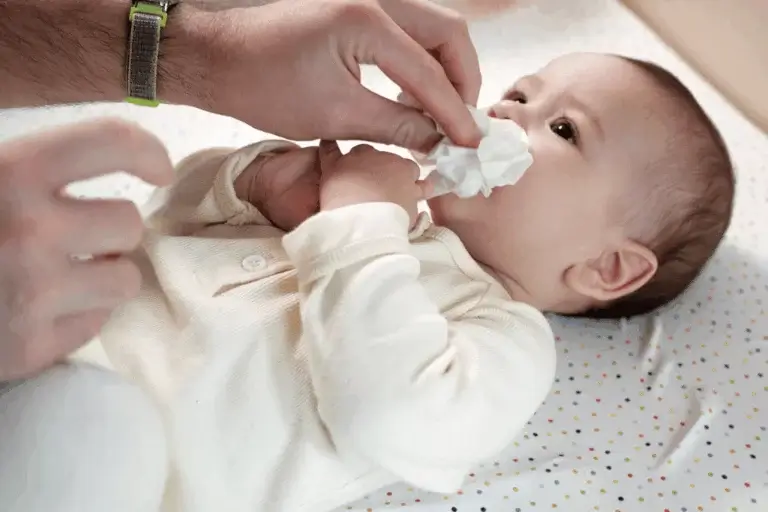
- hygiene of the baby sit, hands, mouth after meals
- hygiene of adults with sensitive skin face, hands, sensitive areas
- hygiene in mobility transportation, work, travel
- hygiene in medical environment : more technical wipes, depending on the pharmacy's positioning.
The idea is not to multiply the references, but to cover moments of life : at home, outdoors, at work, with a newborn, post-operative, etc.
Table: how to position wet wipes in an “hygiene-friendly” offer?
| Moment of use | Recommended wipe type | Key promise | Shelf placement |
|---|---|---|---|
| Change baby | Baby wipes for sensitive skin, fragrance-free, alcohol-free | Maximum tolerance, respect for the hydrolipidic film | Baby and childcare department |
| Face & hands daily care | Sensitive skin wipes / face & hands | Gentle cleansing, no tightness | Daily hygiene / dermo-cosmetic care |
| Commutes & travel | Compact portable size, resealable pouches | Convenience, quick hygiene, family use | Endcap, seasonal zone / checkout |
| Home care / post-op | Very soft wipes, quality fibers, neutral formulas | Care for fragile skin | First aid / bandages aisle |
This type of segmentation helps pharmacists advise better and groups to structure their private label offer.
What formulation for a truly “hygiene-friendly” wipe?
A wipe that fits into a “hygiene-friendly” offer should respect a few simple principles:
- Short and readable formula
- majority purified water
- no alcohol, no fragrance for sensitive or baby lines
- absence of controversial preservatives
- Skin tolerance
- dermatological tests
- compatibility with sensitive / atopic skin depending on the target
- soft, non-irritating texture
- Support and environment
- biodegradable or naturally sourced fibers if possible
- optimized packaging (reasonable sizes, efficient closure system)
This is precisely the angle of biodegradable wet wipes, designed to be compatible with messaging focused on softness, safety, and environmental impact.
Integrate wet wipes into a private-label “hygiene-friendly” strategy”
For a group or a laboratory, the stakes are twofold:
- have a good product,
- make one strong brand signal.
The integration of wet wipes into a private label offering involves:
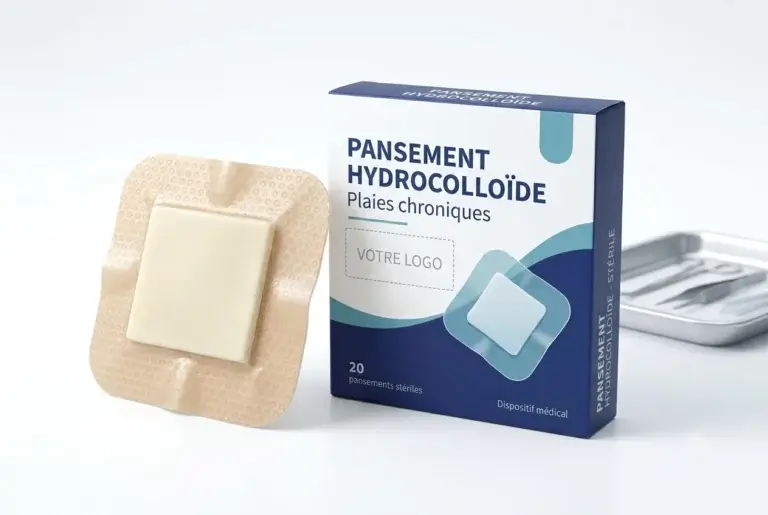
- a visual consistency with the rest of the range (serum, cotton pads, bandages...)
- a clear position : for example “sensitive skin”, “baby”, “active family”
- a promise kept : hypoallergenic, alcohol-free, biodegradable, etc.
- a pharmacy education : simple consulting arguments to remember.
This is where a white label pharmaceutical manufacturer not only to produce the wipe, but also to help define formats, packaging and technical data sheets adapted to the pharmaceutical distribution channel.
Example of building a mini “hygiene-friendly” product line around wipes
To make the approach concrete, here is a typical mini-range for a pharmacy or a group:
- Sensitive skin baby wipes fragrance-free, alcohol-free, 54 or 72 count format
- Sensitive skin hand and face wipes family use, travel size + value pack
- Sterile cotton pads for targeted cleansing, infant care, and delicate skin
- Saline solution in a bottle for nasal or eye washing or for rinsing cleansed areas
We get a coherent offer where the wipes are the loss leader, but where the entire range reinforces the image of a hygiene offer respectful and professional.
The role of the pharmacist and the pharmacy team
The best products remain invisible if the team is not comfortable with consulting. For an “hygiene friendly” offering to come to life:
- Explain in a few sentences why is this wipe different (formula, fabric, skin-friendly, environment),
- link the recommendation to a concrete context : “for your baby”, “for your travels”, “for your highly reactive skin”,
- propose one alternative pack when an overly harsh wipe has already been used.
The clearer the product sheets and training materials, the more confident the team feels in directing patients toward the brand of the group or laboratory rather than toward a national brand.
How Smart Agents Healthcare supports this type of project
As a manufacturer and B2B partner, Smart Agents Healthcare supports laboratories, pharmacy groups, and distributors across the entire chain:
- definition of wipe positioning in the hygiene range,
- choice of formulas and media compatible with a “hygiene-friendly” promise,
- development of biodegradable wet wipes suited to the target audience (baby, adult, sensitive skin…),
- integration into a complete white-label offer including physiological serum, sterile cotton, bandages, etc.
The goal is not just to manufacture a product, but to build a clear and credible offer for pharmacists and their patients.
Conclusion
Integrating wet wipes into an “hygiene-friendly” offer in a pharmacy is not just adding one more reference:
it is place a visible marker of the brand promise in terms of safety, gentleness, and responsibility.
By working on uses, formulas, environmental impact, and consistency with the rest of the product range, pharmacy groups and laboratories can transform a simple wipe into strong vector of differentiation.