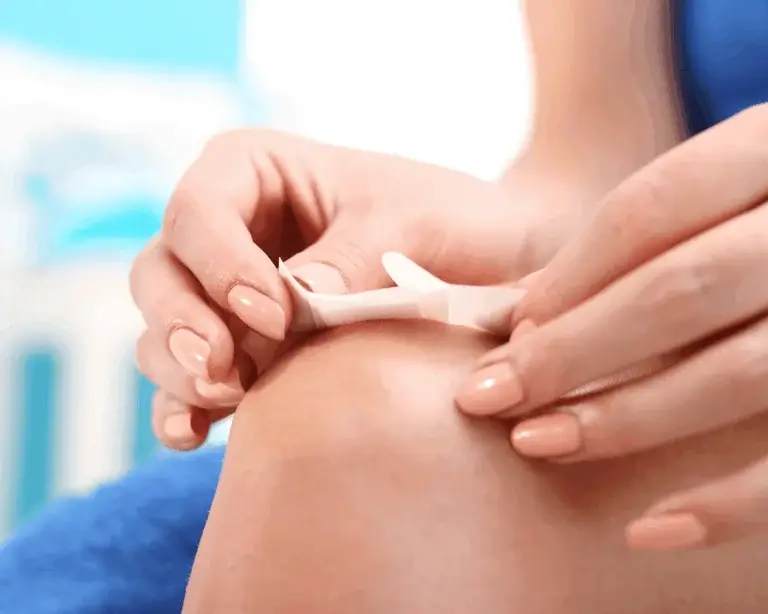
Flow market, LPP reimbursement, controlled margins: wound healing dressings represent a real opportunity for a pharmaceutical group looking to develop its own brand. Here is how to structure the approach.
Why bandages are a good private label product
Hydrocolloid dressings and foam dressings check all the boxes for a good private label product:
- A growing market: chronic wounds (pressure ulcers, leg ulcers) affect an aging and growing population.
- A reimbursed product: listed on the LPP (List of reimbursable products and services), it is covered by the French National Health Insurance upon prescription.
- A recurring prescription: the regular renewal of dressings generates a stable volume.
- An affordable ticket: a technical product, but without electronics, sourced at a controlled cost.
The brand-by-brand refund mechanism
This is the key point for a group. Since January 1, 2022, the reimbursement of dressings under the LPP is no longer based on generic codes, but on individual codes assigned by brand. Generic codes are now only used as technical specifications and lists of indications.
Specifically, this means that a private-label range of dressings can have its own reimbursable LPP line, in the group's name—an essential condition for being reimbursed under its own brand.
Where is the margin for a group?
The interest operates on two levels:
- For member pharmacies: each pharmacy makes its profit on the difference between the purchase price and the reimbursed selling price of the dressing dispensed.
- At the group level: by becoming a supplier of its own brand, it captures a margin at the purchasing center and builds network loyalty around an exclusive range.
Note: it is the patient who is reimbursed by the National Health Insurance based on the LPP rate. The pharmacist and the group make their profit from the commercial margin, not from the reimbursement itself.
Steps to launch your product line
- Define the product range — shapes (slim, thick, anatomical), sizes, and levels of absorbency according to the network's needs.
- Choose a certified manufacturer — ISO 13485 and MDR 2017/745 are essential for LPP registration.
- Customize the packaging — at the group's brand, with the mandatory regulatory notices.
- Compile the LPP registration file — to obtain individual codes in the brand's name.
- Deploy within the network — accompanied by a pitch for member pharmacies.
The Smart Agents Healthcare support
The main obstacle for a purchasing group is not regulatory but operational: finding a reliable manufacturer at a competitive price, capable of delivering a compliant product range.
Smart Agents Healthcare supports pharmaceutical groups in the contract manufacturing of hydrocolloid and foam dressings under private label, ISO 13485 and MDR 2017/745 certified. From the definition of specifications to delivery, including support for the LPP registration file, we help our partners build a reimbursable product range under their own brand.
→ Discover our white-label bandage range
FAQ
Verified sources :
• Individual brand codes since 2022: SNDS (Health Data Hub), ADIPH
• LPP registration Title I Chapter 3: ameli.fr
• Patient care pathway: Magnolia, ameli.fr
• Chronic wound market: industry sources for dressings