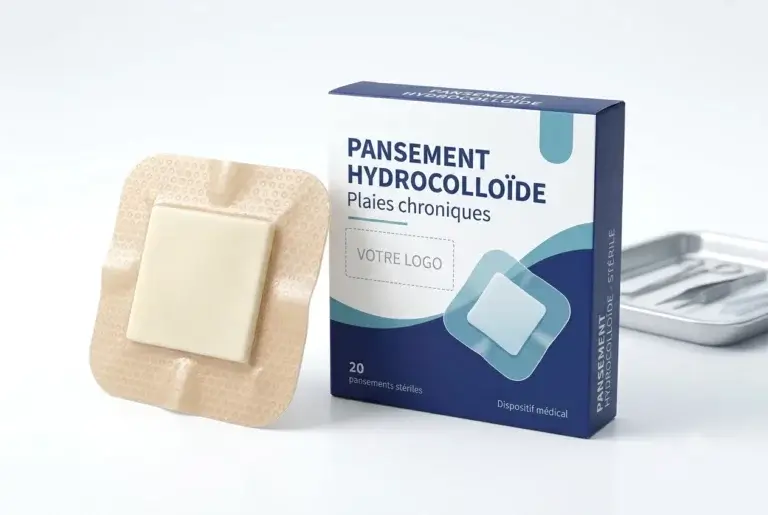

The French pharmaceutical industry is going through a period of profound transformation. Between the relocation of production, the newly expanded roles of pharmacists, and the rise of white-label products, pharmacies and pharmaceutical groups currently have fertile ground to grow their revenue and strengthen their differentiation.
This article gives you a clear reading of the market state in 2026 — with the real figures, regulatory challenges, and above all, the concrete opportunities you can quickly activate as an independent pharmacist or group member.
1. The French pharmaceutical industry in 2026: key figures
France remains one of the major players in the global pharmaceutical industry. Here is the reference data from the LEEM (The Pharmaceutical Companies of France) and of the’EFPIA (European Federation of Pharmaceutical Industries and Associations) for 2024-2025:
| Indicator | Figure 2024–2025 | Source |
| Total revenue | €67.5 billion | LEEM 2024 |
| Direct jobs | 100 000+ | LEEM 2024 |
| Export share | ~75% of revenue | LEEM 2024 |
| R&D investment | €6.5 billion/year | EFPIA 2024 |
| Global ranking | 4th largest global exporter | LEEM 2024 |
| Number of establishments | 270 production sites | LEEM 2024 |
France is the world's 4th largest exporter of medicines and the 2nd in Europe behind Germany. The sector accounts for about 2.5% of national GDP according to LEEM.
These figures illustrate a generally healthy sector that is nonetheless undergoing significant structural transformations—notably pricing pressure on generics, the rise of biosimilars, and the relocation of API (Active Pharmaceutical Ingredient) supply chains following post-Covid supply tensions.
2. The new missions of pharmacists: a direct growth driver
Since 2023, the duties of community pharmacists have been significantly expanded by law. These new skills create a direct demand for complementary products and medical devices.
2.1 What pharmacists can do in 2026
- Expanded vaccination: flu, Covid-19, but also shingles, papillomavirus and soon meningococcus — requires disinfection and protection consumables
- Medication review : monitoring of polymedicated patients, management of treatment adherence
- Screening and rapid tests: strep throat, flu, Covid, STI — automated testing machines and self-diagnostic devices are becoming essential
- Boxed prescription: renewal of certain prescriptions, dosage adjustments
- Teleconsultation in pharmacy: teleconsultation booths, blood pressure monitoring, diabetes
Each of these missions creates a product need. A pharmacist who vaccinates needs disinfecting wipes, compresses, and saline solution. A pharmacist who does screening needs self-diagnostic devices. That is where the white-label strategy comes in.
To go further on this subject: new pharmacist missions in 2025 and product opportunities →.
2.2 What this means for groups
Pharmaceutical groups (Groupama, PHR, Welcoop, Pharmavie, etc.) have every reason to integrate private label product ranges in order to:
- Strengthen the brand identity of their member pharmacies
- Improve margins on high-volume products (saline solution, wipes, compresses)
- Respond to new missions without depending on the catalogs of major manufacturers
- Differentiating the pharmacy in the face of e-health pure player competition
3. The best white-label product opportunities for 2026
Here are the pharmaceutical and para-pharmaceutical products offering the best potential-to-accessibility ratio for a pharmacy or pharmacy group wishing to launch its own brand:
| Product | Market potential | Level of competition | Launch time |
| Physiological serum | Very high | Average | 6–10 weeks |
| Disinfecting wipes | High | Average | 8 to 12 weeks |
| Cotton pads / gauze pads | High | Weak | 6–8 weeks |
| Self-diagnostic devices | Very high | High | 12–16 weeks |
| Medical nebulizers | Average | Weak | 10–14 weeks |
3.1 White-label saline solution
It is the easiest product to launch and the most profitable by volume. Demand is steady, margins are good on the 500 ml bottle format, and the regulations are well-managed. A group of 50 pharmacies can order starting from 16,000 units and offer their own saline solution under their own brand in 6 to 10 weeks.
Discover our offer: private label saline solution.
3.2 Professional disinfecting wipes
With the expansion of vaccination and screening missions, disinfecting wipes have become a primary consumable in pharmacies. Margins on the 40/100-unit box formats are significant, and the product differentiates itself well through certification (EN 14476 virucidal).
Learn more: professional disinfecting wipe.
3.3 Sterile cotton gauze pads and squares
As fast-moving pharmacy products, compresses and cotton pads are often bought as national brands, whereas private labels allow for margins that are 30 to 50% higher at equivalent volumes.
Compare options: cotton pads vs. sterile gauze pads →.
3.4 Self-diagnostic devices
Rapid diagnostic orientation tests (TROD), blood pressure monitors, connected thermometers, oximeters — this segment has been growing strongly since 2020 and pharmacists are now at the center of the local healthcare pathway.
Our complete analysis: self-testing in pharmacies: which devices to offer.
4. Regulations: what pharmacies need to know in 2026
4.1 The regulatory framework for white-label products
Offering private label products does not mean ignoring the regulatory framework — quite the contrary. Each product category is subject to specific rules:
- OTC medications: Mandatory MA (Marketing Authorization), issued by’ANSM — generally not applicable in direct white label
- Medical devices: compliance with MDR 2017/745 regulation mandatory (CE marking)
- Biocidal products (disinfectant wipes): compliance with EU Regulation 528/2012 and EN standards
- Cosmetic products (baby wipes, skincare): EU cosmetics regulation 1223/2009, CPNP notification
4.2 Reshoring production: A strategic opportunity
Since the Innovative Health 2030 plan launched by the French government, the relocation of pharmaceutical production to France and Europe has been a national priority. This translates into:
- Subsidies and investment aid for French manufacturers
- A growing preference among public and hospital buyers for Made in Europe products
- Securing supplies for pharmacies working with local manufacturers
Smart Agents Healthcare is part of this local production logic, with ISO 13485 certified manufacturing partners based in France and Europe.
5. FAQ — Frequently asked questions about the pharmaceutical industry and pharmacy private labels
According to LEEM, France has approximately 270 pharmaceutical production sites and more than 300 member companies. The sector directly employs more than 100,000 people, making the pharmaceutical industry one of the country's leading industrial employers.
The French pharmaceutical industry generated a turnover of around 67.5 billion euros in 2024, with about 75% coming from exports. France positions itself as the 4th largest global exporter of medicines according to data from LEEM and EFPIA.
White labeling (or private labeling) involves a pharmacy or pharmacy group marketing products manufactured by a third party under its own brand. The manufacturer handles production, certification, and regulatory compliance. The pharmacy chooses the packaging, brand name, and positioning. This is a common strategy in mass retail and has been growing strongly in pharmacies since 2020.
Aside from prescription drugs, the vast majority of parapharmacy products, Class I and IIa medical devices, biocidal products, and dietary supplements can be offered under a private label. The most common products are saline solution, wipes, compresses, thermometers, blood pressure monitors, and oximeters.
Minimums vary depending on products and manufacturers. At Smart Agents Healthcare, the minimum order quantity is 16,000 units for saline solution, with development and delivery lead times of 6 to 12 weeks depending on the product. Lower volumes can be considered for buying groups or multi-product orders.
Yes. The Innovative Medicines 2030 government plan and post-Covid supply chain strains have created a favorable dynamic for French manufacturers and distributors. Pharmacies that source from certified French or European manufacturers benefit from better traceability, secure lead times, and a local commercial argument appreciated by patients.
6. Going further
Our practical guides for pharmacies and pharmacy groups:
- What is the best pharma product to offer in 2026?
- Private label saline solution: manufacturing, standards, and customization
- Professional disinfecting wipe: how to choose in 2026?
- Self-diagnosis in pharmacies: what medical devices are available?
- Who are the best private label pharmaceutical manufacturers?
- White-label pharma packaging: designing reliable and compliant packaging
Institutional references:
- LEEM — Key figures of the French pharmaceutical industry
- ANSM — National Agency for Medicines Safety
- EFPIA — European Pharmaceutical Industry Data
- MDR 2017/745 Regulation on Medical Devices
- Innovative Medicines Plan 2030 — French Government
Conclusion
The French pharmaceutical industry in 2026 offers pharmacies and pharmacy groups a particularly favorable context to develop their own brand lines: newly expanded missions for pharmacists, relocation momentum, and growing patient demand for local and traceable products.
Private labeling is no longer reserved for large groups. With the right certified manufacturing partners, an independent pharmacy can launch its first product line in less than 3 months, focusing on high-potential products such as saline solution, disinfectant wipes, or sterile compresses.
➡ Contact Smart Agents Healthcare to discuss your white-label product line project →